

New Berlin, WI · Residential & commercial floor coatings across southeastern Wisconsin
New Berlin EliteEpoxy Flooring

Epoxy flooring · New Berlin, Wisconsin

Concrete floors,finished with carefor Wisconsin life.

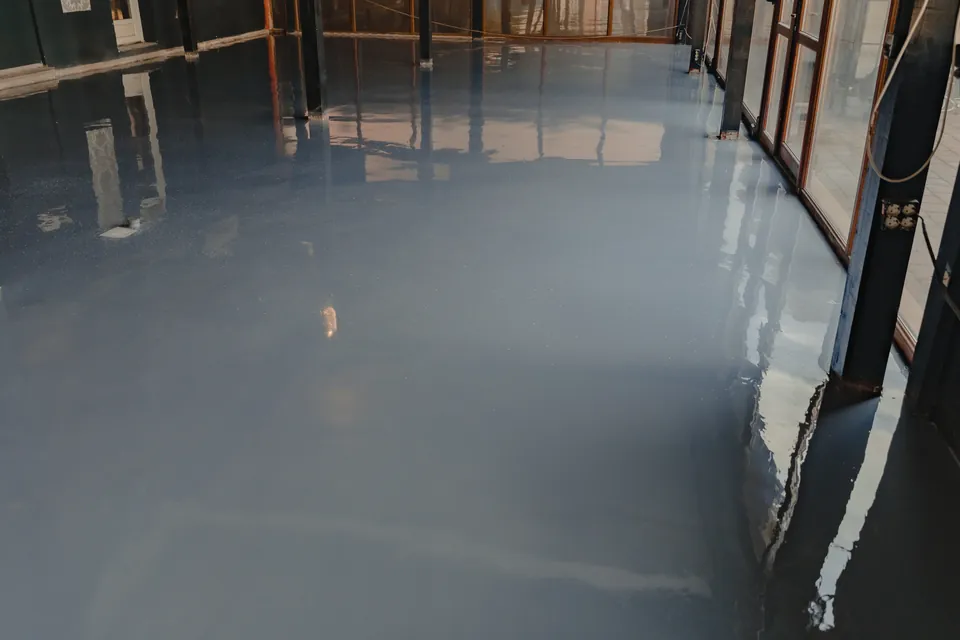
New Berlin Elite Epoxy Flooring installs garage floor coatings, basement floors, metallic and flake finishes, and commercial epoxy systems for homes and businesses across New Berlin and the surrounding area. Every floor starts with proper grinding and repair, then a coating chosen for how the space is used — and for what our winters bring in on the tires.

Plan your floor

Free estimate

No obligation. We use your details only to respond to this request.

9coating systems for homes & businesses
2New Berlin ZIP codes: 53146 & 53151
100percent of floors mechanically prepared
12communities in our service area

01 About the work

Epoxy flooring in New Berlin, WI

A good floor coating is mostly invisible work: grinding, patching, testing and patience — finished with a surface you'll enjoy every time the garage door opens.

New Berlin sits on the eastern edge of Waukesha County, where established subdivisions on the east side give way to larger lots and newer construction to the west. That mix shows up in the floors we're asked to coat. One week it's a 1970s attached garage with decades of oil staining and a sealer nobody remembers applying; the next it's a newly poured slab in a house that still smells like fresh drywall, or a tenant space in one of the business parks off Moorland Road or Lincoln Avenue.

What those floors have in common is concrete, and concrete in southeastern Wisconsin lives a hard life. It freezes, thaws, gets soaked with brine from January through March, and is expected to look clean anyway. Our job is to read the slab you have, prepare it properly, and install an epoxy, polyaspartic or polyurea system that suits it. We don't sell one product for every floor, and we'll tell you when a simpler option is the smarter one.

How we approach a project
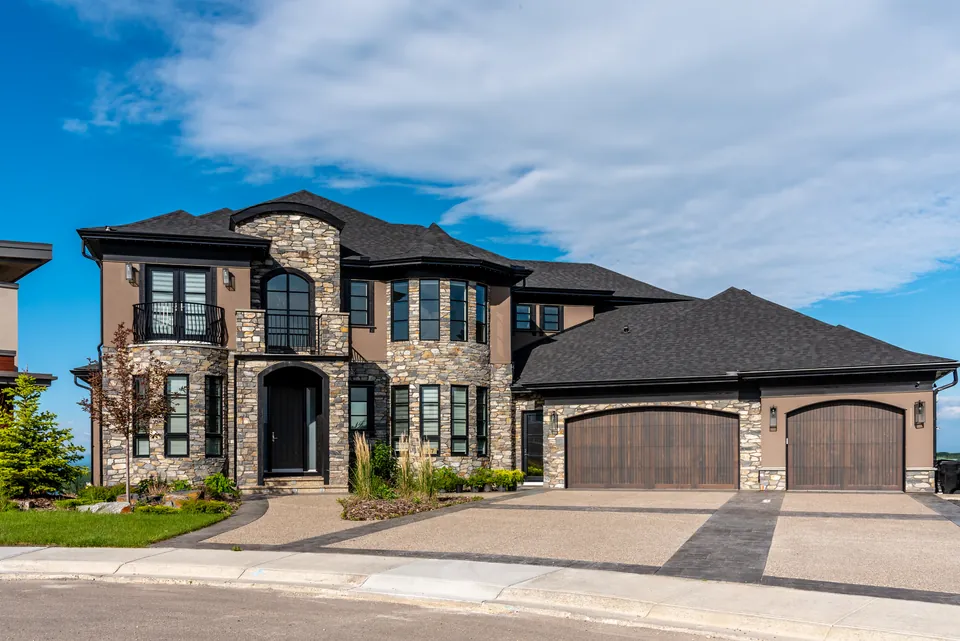
Stone-front suburban home with a double garage and wide driveway
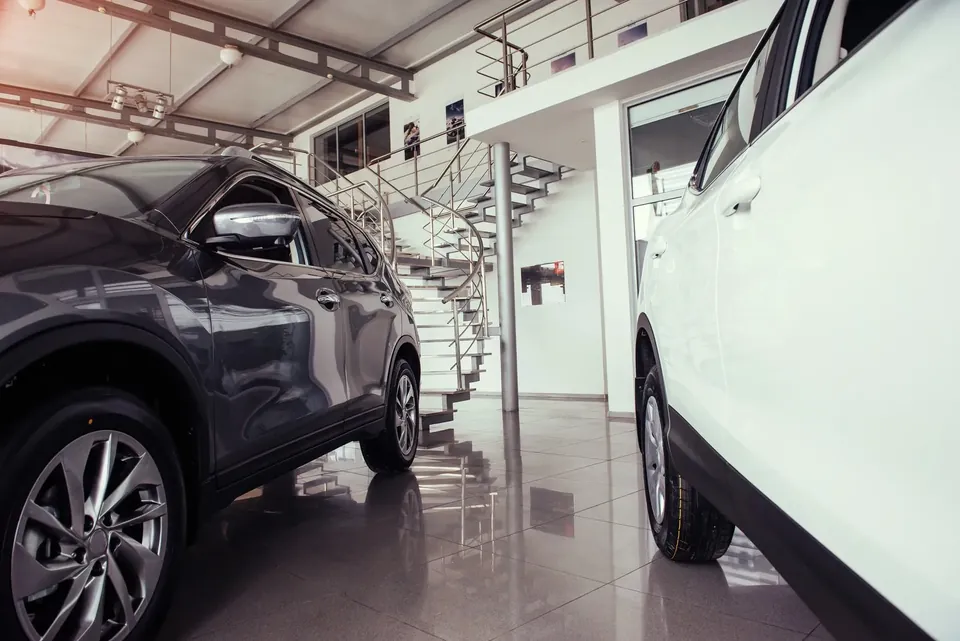
Two vehicles parked on a glossy coated garage floor
Homes & businessesGarages, lower levels, shops, showrooms and warehouses.

02 Why choose us

Why New Berlin property owners call us for epoxy floor coatings

Floor coatings look simple from the outside. The difference between one that lasts and one that peels in its second winter usually comes down to decisions made before any coating is opened. Here is what we put our attention on.

01

Preparation comes first

Every job gets ground, patched and, where it matters, moisture-tested before anything is mixed. The slab underneath decides how long the finish lasts, so that is where the hours go.

02

Systems chosen for winter

Salt brine, snowmelt and cold slabs are the norm here. We specify textures, topcoats and cure plans with a Wisconsin February in mind, not a sunny showroom.

03

One contractor, many systems

Epoxy, polyaspartic, polyurea, flake, metallic and solid-color floors. Having all of them available means the recommendation fits your floor rather than our inventory.

04

Clear, written scopes

Your estimate spells out the prep, the repairs, the products and the schedule. No vague line items, and no surprises once the grinder is running.

05

Respect for your home

Dust collection, protected walls and doorways, and a cleaned-up site at the end of each day. We work in attached garages and finished basements, so care matters.

06

Residential and commercial

The same crew mindset applies to a single-car garage and a warehouse aisle: plan the work, protect the space, and leave a floor that does its job.

03 Floor systems

Floors for every part of the property

From the garage you walk through every morning to the warehouse aisle your forklifts run all day, each space gets a coating matched to its traffic, its exposure and the look you want.

Finished lower-level living room with a light coated floorLower-level living space

Residential epoxy flooring

Lower levels, laundry rooms and the rest of the house

Plenty of homes in New Berlin have a lower level that's half finished: a rec room on one side and a bare slab around the furnace, washer and storage shelves on the other. A residential epoxy floor ties those spaces together with a surface that handles a leaking water heater or a dropped paint can far better than carpet or vinyl plank.

We coat basements, laundry and mudrooms, home gyms, utility rooms and the concrete floors in three-season rooms. The first step indoors is always a moisture test, because a slab that feels dry in August can behave very differently after a wet spring.

Residential epoxy flooring
SUV with doors open on a clean coated garage floorTwo-car garage coating

Garage epoxy flooring

The garage floor takes the worst of winter

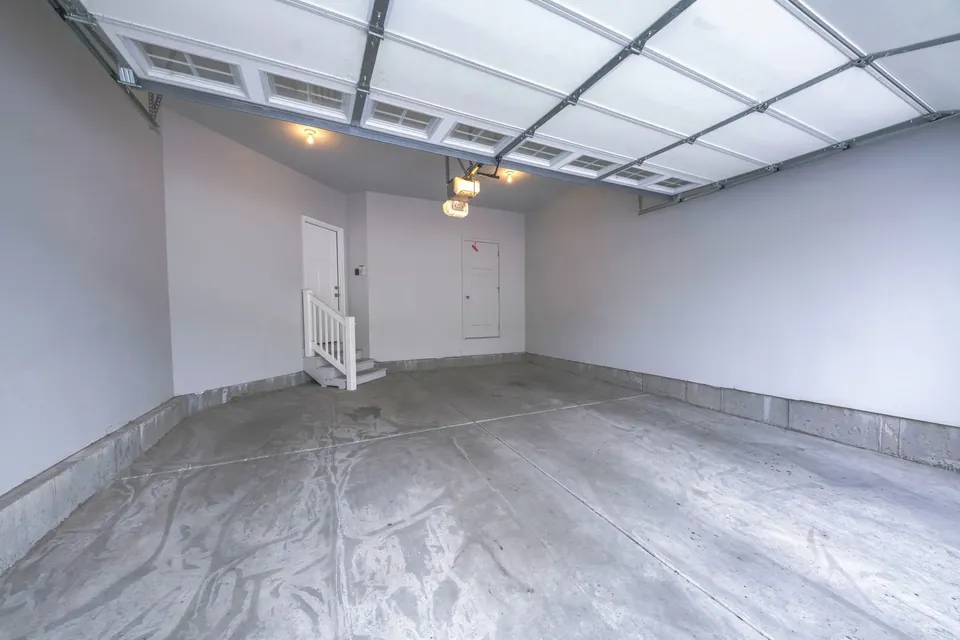
Every car that pulls in from Interstate 43 or National Avenue in February brings a coating of salt slush with it. That brine melts onto the slab, soaks in, and refreezes overnight. Over a few seasons it leaves bare concrete pitted, flaking and permanently stained, especially near the door where the car drips first.

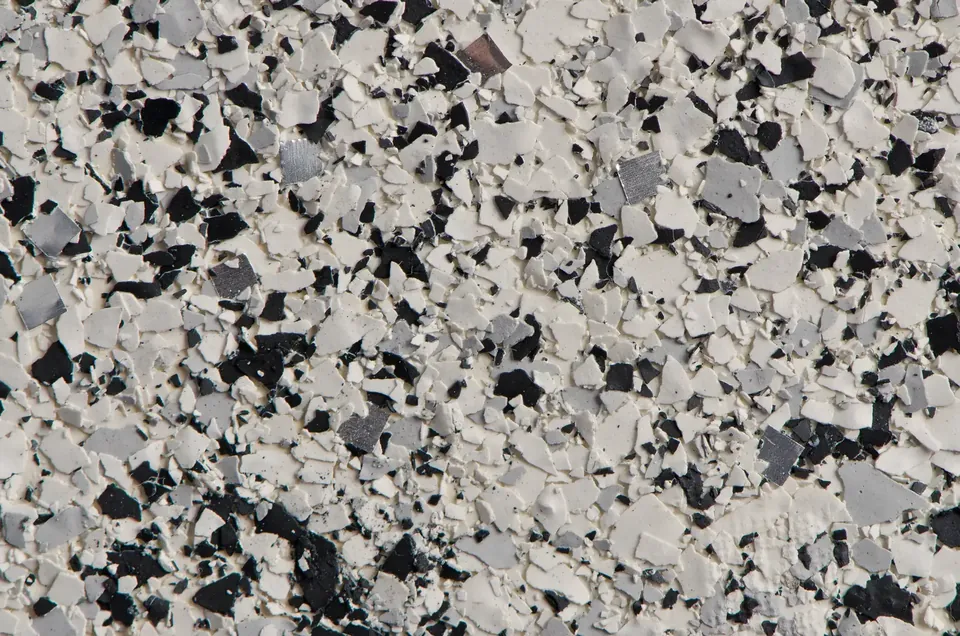
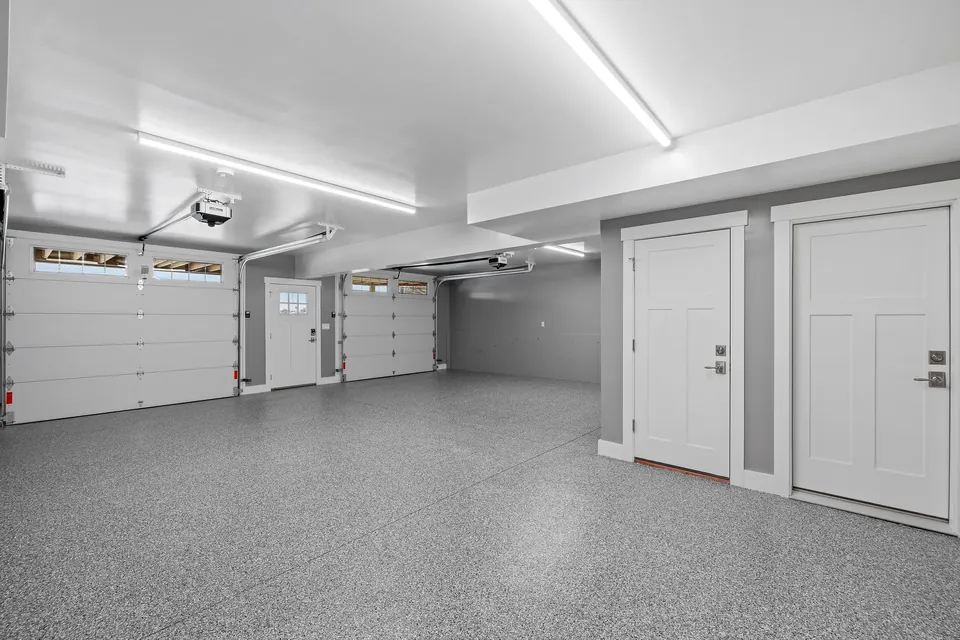
Our garage floor coatings seal the surface so meltwater sits on top where it can be squeegeed out. Most homeowners pair a decorative flake broadcast with a polyaspartic topcoat for a textured, forgiving finish that hides dust between cleanings and still offers grip when the floor is wet.

  • Attached and detached garages
  • Crack and spall repair included in scope
  • Textured topcoats for wet footing
  • Stem walls and door edges detailed
Garage floor coatings in New Berlin
Retail boutique with a light seamless floor

Commercial epoxy flooring

Customer-facing floors that keep up with the day

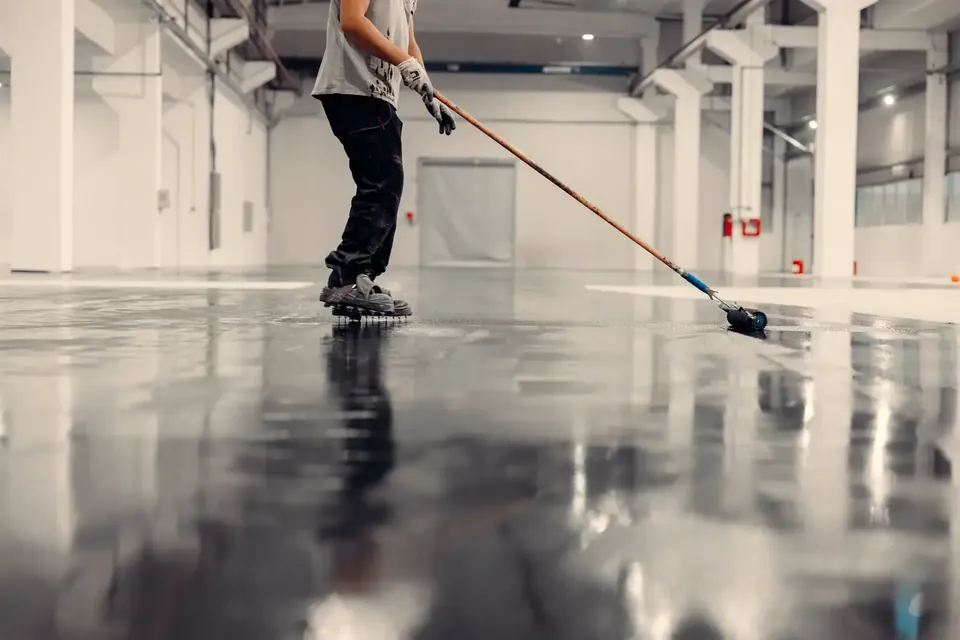
Retail shops, salons, clinics, offices and showrooms need floors that clean quickly, look professional to customers and stand up to rolling carts and steady foot traffic. We plan commercial installs around your hours, phase work where we can, and choose finishes with the right balance of sheen and slip resistance for each area.

Commercial epoxy flooring

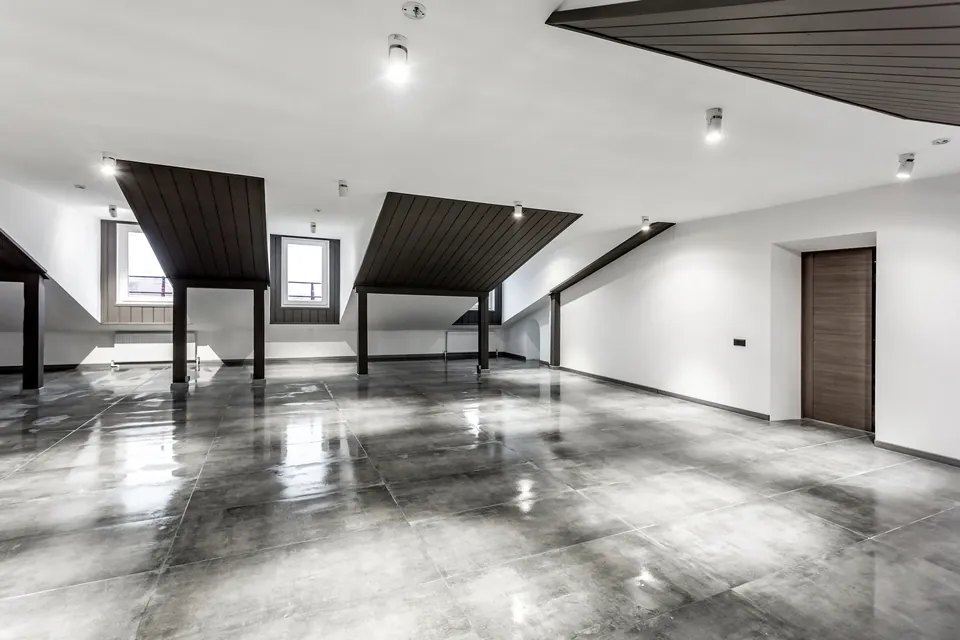
Fleet hall with yellow safety line markings

Industrial flooring solutions

Warehouses, plants and service bays

New Berlin is home to three business and industrial parks covering roughly 1,126 acres, and many of those buildings run on concrete floors. For warehouse and light industrial spaces we install thicker, harder-wearing systems with options for safety striping, marked walkways and forklift lanes, along with repairs to joints and damaged areas.

Warehouse floor coatings
Motorcycle on a lift inside a home workshopHome workshop

Basement & workshop flooring

Spaces where real work happens

Workshops collect everything: dropped fasteners, cutting oil, sawdust, solvent, and the occasional jack stand dragged across the floor. A coated slab makes cleanup a matter of sweeping and wiping rather than scraping, and a light color helps you find that 10 mm socket before it disappears under the bench.

For basement shops and hobby rooms we balance chemical resistance with comfort and appearance, often using a solid-color epoxy with a durable topcoat. In detached workshops and pole buildings, where temperatures swing more widely, we lean toward systems that tolerate those conditions and can be installed in a tighter weather window.

Polyurea systems for working floors

05 Installation process

How an epoxy floor goes in, step by step

Every project follows the same order of operations. The details change with the system, but skipping a step is never one of the options.

  1. Walk-through and slab assessment

    We look at the concrete in person: cracks, previous coatings or sealers, oil staining, how water drains, and signs of moisture. We also ask how you actually use the space, because a hobby workshop and a two-car garage that only sees parking need different things.

  2. A written plan and estimate

    You get a clear scope that lists the preparation method, repairs, the coating system, colors or blends, and the expected schedule. If two systems would both work, we explain the difference in plain terms so you can decide.

  3. Mechanical surface preparation

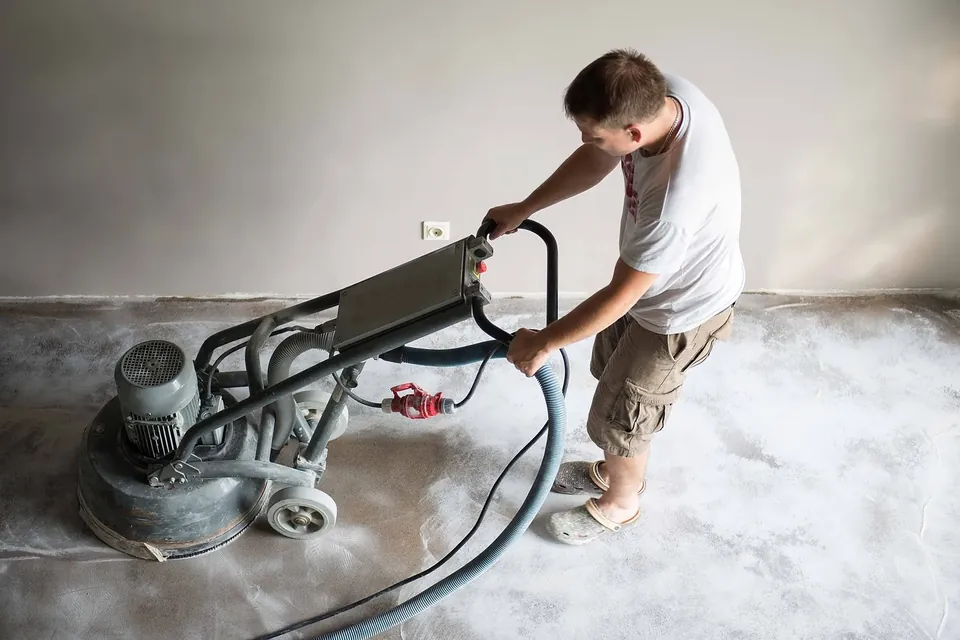
    The floor is diamond ground with dust collection to remove sealers, weak surface paste and contamination. This opens the concrete so the first coat can bond into it rather than sit on top.

  4. Repairs and detailing

    Cracks, pits, spalls and control joints are filled or honored as appropriate, then ground flush. Edges along walls and stem walls are prepared by hand so the finished floor looks crisp at the perimeter.

  5. Base, broadcast and build

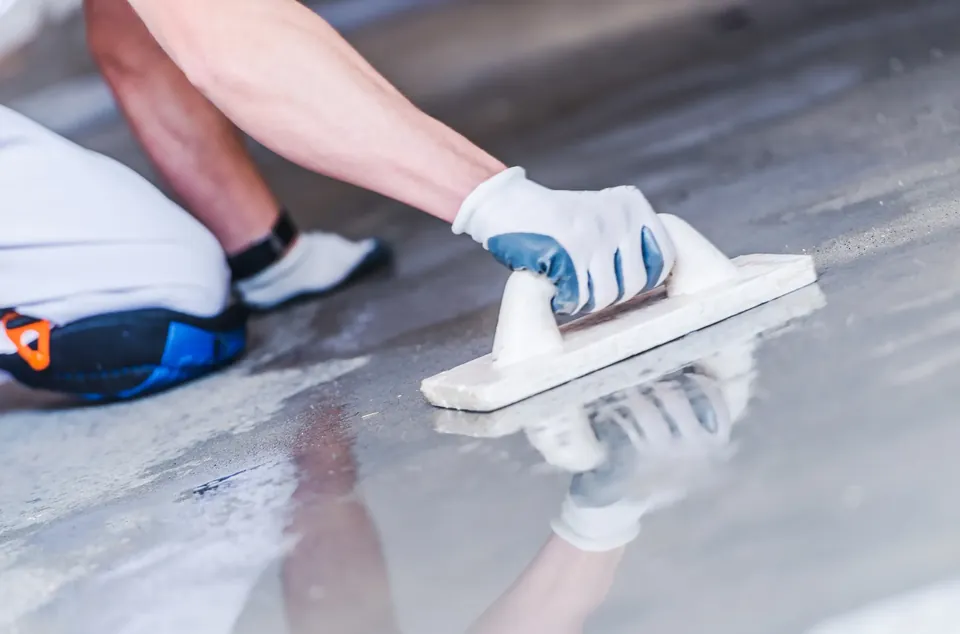
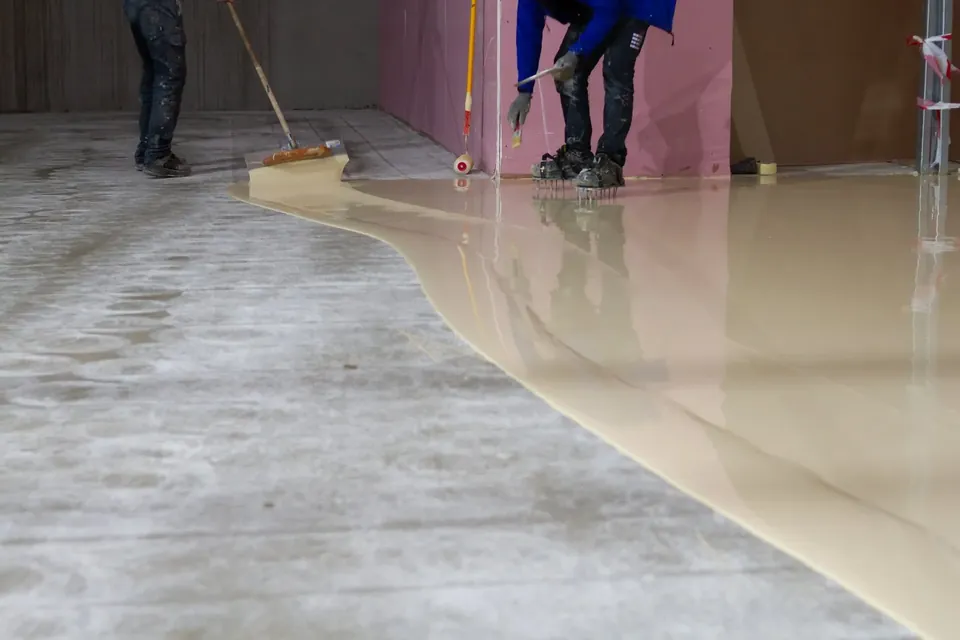
    The base coat goes down at the specified thickness. Depending on your system, decorative flake is broadcast into it, metallic pigments are worked by hand, or a solid color is built up in layers.

  6. Topcoat, cure and walkthrough

    The clear top layer locks everything in and decides how the floor feels underfoot. Before we pack up, we look over the finished surface together and talk through when you can walk, park and move things back in.

Built to be lived on

Prepare the slab properly once, and the floor keeps paying you back.

Whether it's a two-car garage on a cul-de-sac or a tenant space near Moorland Road, the request is the same: a floor that looks finished, cleans easily and doesn't need redoing in two years. Tell us about yours and we'll come out to look at it.

Written, itemized estimates Diamond-ground preparation Residential & commercial

06 Benefits

What a professional coating actually changes

Beyond the obvious improvement in appearance, here's what most owners notice in the first year with a coated floor.

Easy to clean

Spills, sawdust, snowmelt and road grime wipe or squeegee off a sealed surface instead of soaking into porous concrete.

Protection for the slab

A bonded coating shields concrete from salt, oil and chemical drips that slowly break down bare surfaces.

A brighter space

Light-colored and glossy finishes bounce overhead light, which makes garages, basements and shops feel noticeably brighter.

A finished look

A coated floor makes a garage or lower level feel like part of the house rather than an afterthought.

Safer footing

Texture can be built into the topcoat so the floor still grips when it is wet from melting snow.

Less dust

Sealed concrete stops the fine powdering that bare slabs shed, which is easier on cars, tools and storage.

Quick return to use

Fast-curing systems let many homeowners walk on the floor the same day and park sooner than with older products.

Room to customize

Flake blends, metallic effects, solid colors, striping and sheen levels let the floor match the way the space is used.

07 Built for Wisconsin

Flooring solutions for Wisconsin properties

A floor in southeastern Wisconsin goes through four very different seasons. Each one tests the coating in its own way, and a good installation plans for all of them.

Winter

Salt, slush and cold slabs

Brine dripping off vehicles is the single toughest thing a garage floor faces. A sealed, non-porous surface keeps salt water from soaking in, and textured topcoats keep the floor walkable when it's wet.

Spring

Thaw and moisture

Snowmelt, rising groundwater and spring rain push moisture toward slabs, especially in basements. This is when vapor issues show themselves, which is why we test before coating below grade.

Summer

Heat and humidity

Humid air and hot afternoons affect how coatings flow and cure. We adjust mixing, timing and product choice so the floor levels properly and the topcoat cures without blushing or trapped moisture.

Fall

The scheduling sweet spot

Moderate temperatures and drier slabs make autumn a popular time to coat a garage before the first snow. Booking early in the season gives the floor time to cure fully before salt trucks are out.

Freeze–thaw and concrete movement

Concrete expands and contracts as temperatures swing, and water trapped in surface pores expands when it freezes. Over time that cycle loosens the top layer of an unprotected slab, which is where pitting and scaling come from. Coating doesn't stop a slab from moving, so we respect control joints and treat active cracks appropriately instead of pretending they aren't there.

Attached versus detached garages

An attached garage shares a wall with a heated house and usually stays above the minimum temperatures coatings need for much of the year. A detached garage or pole barn can drop well below that. We look at where your floor is and how it's heated before recommending a system or a date, and we'll suggest timing that gives the coating the best chance to cure properly.

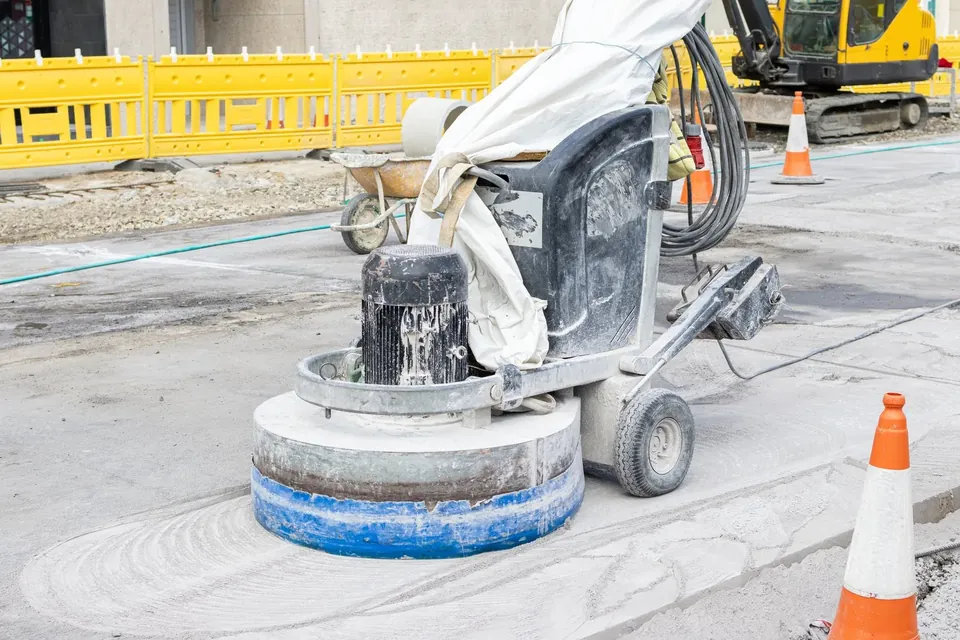
Floor grinder preparing exterior concrete

08 Surface preparation

Concrete preparation and surface considerations

Most coating failures trace back to the surface underneath. Peeling, bubbling and hot-tire lifting rarely mean the coating itself was bad; usually it couldn't grip the concrete because the surface was sealed, dusty, contaminated or damp. That's why we consider preparation the most important part of the job.

Before anything is mixed, the slab is diamond ground to a texture the coating can lock into. Grinding removes old sealers and curing compounds, the weak cement paste on top of the slab, and much of the staining that's built up over the years. Deep oil spots may need extra cleaning or treatment.

  • Moisture testing on basements and slabs with no vapor barrier, so we choose a primer or system that tolerates the conditions.
  • Crack and joint treatment that fills static cracks and respects the control joints concrete needs to move.
  • Old coatings and paint are assessed and removed where they'd compromise adhesion.
  • New concrete is given time to cure before coating; we'll advise on timing if your slab was recently poured.
See how prep fits a polyaspartic system

09 Finishes & spaces

A look at the kinds of spaces and finishes we install — from flake garages and metallic lower levels to commercial gloss and warehouse striping. Select any image to view it larger.

10 Service areas

Based in New Berlin, working across the area

We serve all of New Berlin — the established neighborhoods east of Moorland Road, the larger lots and newer subdivisions on the west side, and the business parks in between. We also regularly travel to neighboring communities in Waukesha and Milwaukee counties.

Estimates are done in person at your property, which lets us see the slab, measure accurately and answer questions on the spot.

See all service areas
New BerlinBrookfieldElm GroveWaukeshaMuskegoWest AllisGreenfieldHales CornersFranklinBig BendWauwatosaPewaukee

11 FAQ

Questions we hear most often

Straight answers about timing, winter installs, preparation and cost. If your question isn't here, ask it when you request an estimate.

Ask us directly
How many days will my garage be out of commission?

Most one- to three-car garages are prepared and coated over one to two working days. Grinding and crack repair usually happen first thing, the base and broadcast go down next, and the topcoat follows once the base has set. Fast-curing polyaspartic topcoats can allow light foot traffic within hours, while parking a vehicle generally waits a day or more depending on the products and the temperature in the garage. We give you a realistic schedule for your specific system before we start.

Can you coat a garage floor in winter?

Sometimes, yes. Coatings care about the temperature of the slab and the air, not the date on the calendar. An attached garage that holds a reasonable temperature can often be coated in colder months, while a detached, unheated building may need to wait for warmer weather or temporary heat. The slab also has to be dry, which can be tricky after weeks of melting snow. We check conditions on site and will tell you plainly if waiting a few weeks would give you a better result.

Will road salt damage an epoxy or polyaspartic floor?

A properly installed, fully cured coating is far more resistant to salt brine than bare concrete, which is why so many Wisconsin homeowners coat their garages in the first place. Salt residue can still dull a finish if it sits for months, so a quick rinse or squeegee-out during the worst stretches of winter keeps the floor looking its best. Choosing a textured finish also helps with footing when the floor is wet.

Do you grind the concrete or just acid-etch it?

For the systems we install, mechanical preparation is the standard: diamond grinding or a comparable method that opens up the surface so the coating can bond. Acid etching is common in DIY kits, but it does a poorer job of removing sealers, laitance and contamination, and it introduces more water into the slab. Grinding costs more effort up front, and it is the part of the job you never see but always depend on.

What about cracks, pitting and spalled concrete?

Most cracks and pits can be filled and ground flush before coating, so they are no longer visible once the floor is finished. Hairline cracks that are actively moving may still show through over time, and we will point those out during the estimate. Spalling from years of salt exposure is repaired with a patching compound rated for the job. Severely deteriorated slabs sometimes need a concrete contractor first, and we will tell you if that is the case.

Is epoxy a good choice for a basement in New Berlin?

It can be an excellent choice, but basements need a moisture check first. Groundwater and vapor moving up through the slab are the most common reason basement coatings fail. We test the slab before recommending anything, and where moisture is present we can discuss vapor-tolerant primers or a different approach entirely. A dry, sound basement slab takes a coating very well and is easy to keep clean.

How much does an epoxy floor cost?

Price depends on square footage, the condition of the concrete, how much repair is needed, and the system you choose. A single-color epoxy for a utility room is a very different project from a full flake system with a polyaspartic topcoat in a three-car garage, or a hand-worked metallic floor in a finished lower level. We measure the space and look at the slab before giving you a written estimate, so the number you see is based on your floor and not a guess.

Do you work on commercial and industrial floors?

Yes. Along with homes, we coat retail spaces, offices, clinics, service shops, warehouses and light industrial areas. Commercial work is scheduled around your operating hours wherever possible, and we can phase larger floors so part of the building stays in use. If your floor needs safety striping, designated walkways or a specific level of slip resistance, those details are part of the plan from the start.

12 Get started

Let's take a look at your floor

Tell us a little about the space and we'll reach out to schedule a visit. We'll look at the concrete, talk through the systems that make sense, and follow up with a written estimate. There's no obligation, and no pressure to decide on the spot.

Request an estimate

New Berlin, WI

No obligation. We use your details only to respond to this request.

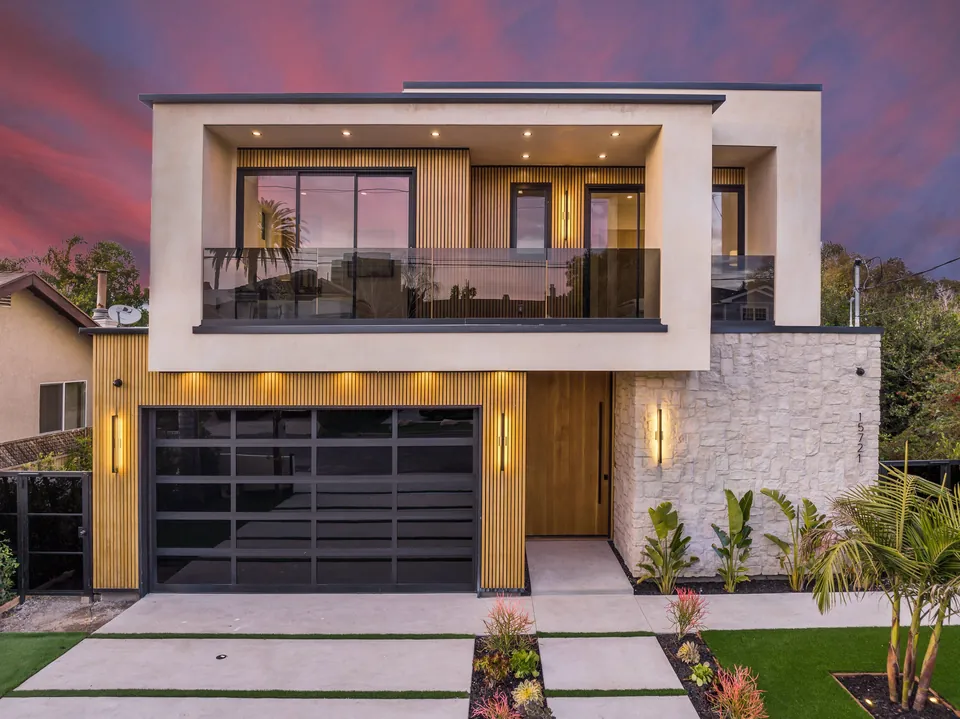
Modern home with a glass garage door under a pink evening sky
Service areaNew Berlin, WI and surrounding communities
EstimatesOn site, measured, and provided in writing
CallFree Estimate