Overview
Polyurea explained
Polyurea earned its reputation outside the flooring world. In industrial settings it is sprayed onto truck beds, tanks and roofs because it can stretch and absorb impact without cracking. Floor-grade polyureas are formulated for roller and squeegee application, bringing many of those same qualities to concrete floors.
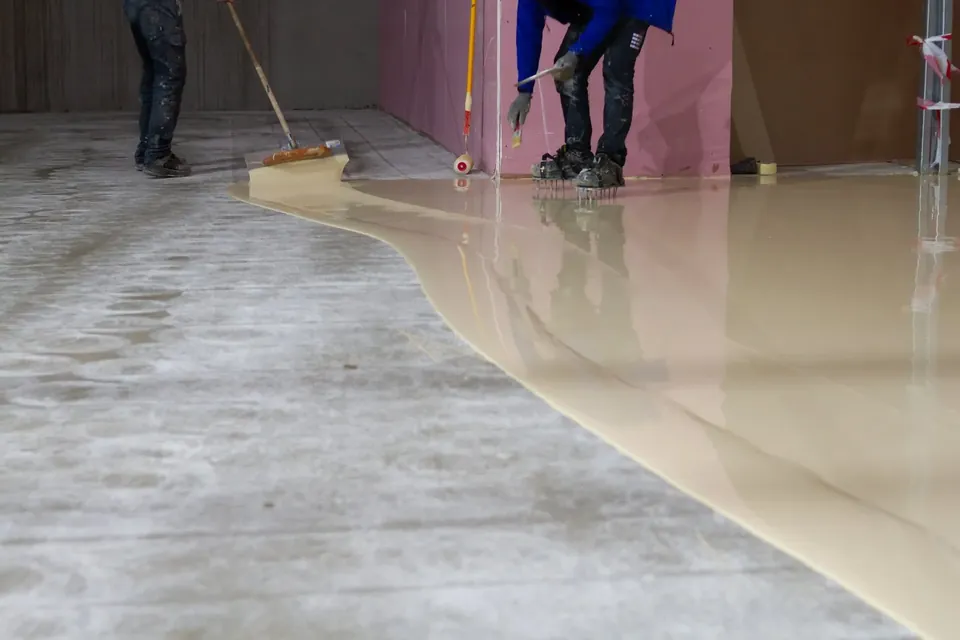
On a floor, polyurea is most often used as the base coat in a multi-layer system. It bonds to properly ground concrete, can be pigmented to any color, and accepts a full or partial flake broadcast. A polyaspartic topcoat then seals the system with UV stability and wear resistance.
What sets polyurea apart from epoxy is how it behaves under stress. Epoxy is very hard but comparatively rigid. Polyurea is tough but has more give, which helps it tolerate impacts like dropped tools and the slight movement that concrete undergoes as temperatures change.
Polyurea also cures quickly, which shortens installation and makes it practical for garages and businesses that need the space back fast. Like polyaspartic, that speed means a short working window and a need for experienced application.
Benefits
Why polyurea is a strong choice
Impact tolerance
Flexibility helps the coating absorb dropped tools and equipment rather than chipping.
Handles temperature swings
Better able to accommodate the expansion and contraction of concrete in unheated spaces.
Fast curing
Shorter time between coats and quicker return to service than most epoxies.
Strong adhesion
Bonds well to properly prepared concrete, forming a solid foundation for the rest of the system.
Moisture and chemical resistance
Holds up well to many fluids, salts and cleaning products when combined with a quality topcoat.
Versatile base
Accepts pigment, flake and decorative layers so you are not limited on appearance.
Options & finishes
Polyurea system configurations
Polyurea is a building block. We combine it with other layers to match the floor's use and the look you want.
Applications
Where polyurea works best
Polyurea makes sense wherever toughness and quick turnaround matter more than a mirror-gloss appearance.
Busy family garages
Cars, bikes, tools and kids, every day.
Detached garages
Unheated buildings with wider temperature swings.
Home workshops
Dropped tools and rolling tool chests.
Auto & service shops
Fluids, jacks and constant traffic.
Equipment storage
Mowers, snowblowers and trailers.
Light commercial
Back-of-house and utility spaces.
Installation
How we install a polyurea floor
Inspect and plan
We assess the slab, discuss how the floor is used and confirm the right system and finish.
Grind and clean
Diamond grinding opens the surface. Oil and contaminants are addressed so the base coat can bond fully.
Repair
Cracks, joints and damaged areas are filled and ground flush.
Polyurea base coat
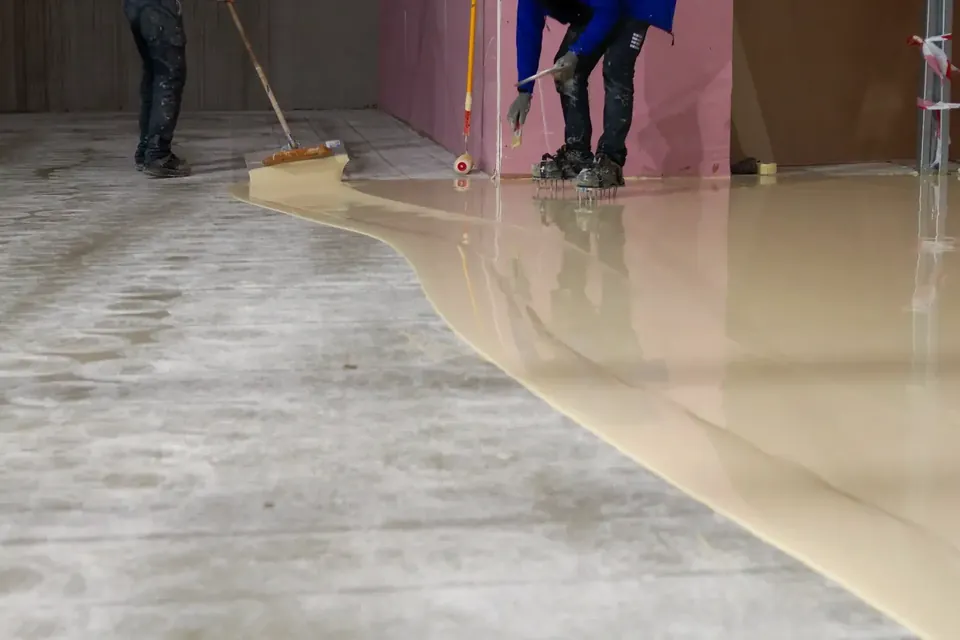
The base is applied in controlled sections within its working time to ensure even coverage.
Flake or color layer
Depending on the look you picked, flake goes into the wet base or the color layer is built up to full coverage.
Topcoat and cure
A polyaspartic topcoat finishes the system. We share timing for foot and vehicle traffic.
Professional installation
Why experience matters with polyurea
Polyurea's fast cure is an advantage on the schedule and a challenge during application. Material has to be mixed, spread and back-rolled in a consistent rhythm, and the crew has to coordinate so edges stay wet and sections blend.
Choosing between polyurea and epoxy as the base is a judgment call. In some situations, particularly where moisture is a concern, an epoxy primer may be the better first layer. We make that decision based on testing and experience rather than marketing.
Polyurea systems are also only as good as the slab preparation beneath them. Grinding, crack repair and contamination removal are not optional, no matter how strong the coating chemistry is.
There is also a lot of misinformation about polyurea online, including claims that it never fails or lasts forever. Every coating has limits. What makes a polyurea floor perform is the combination of proper preparation, appropriate product selection, careful application and realistic expectations, and we would rather set those expectations honestly at the start.
When we recommend polyurea, we explain why it suits your slab and use better than the alternatives, and what you give up in exchange. You should understand your floor as well as we do by the time we start.
New Berlin & Wisconsin
Polyurea and freeze–thaw conditions
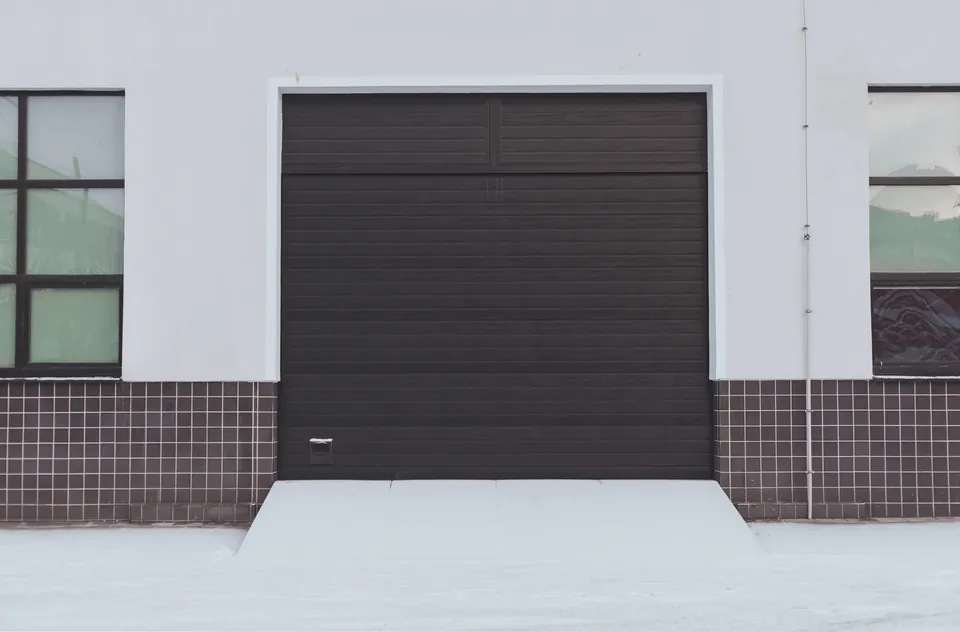
Detached garages, pole buildings and workshops around New Berlin often go unheated through the winter. Their slabs cycle between cold and mild temperatures many times, and concrete moves slightly with each swing. A coating with some flexibility is better able to stay bonded through that movement.
Polyurea's quick cure also helps us take advantage of shorter weather windows in spring and fall, when unheated spaces are warm enough to coat but only for a limited stretch.
For attached garages, polyurea paired with a textured topcoat gives you a floor that handles salt slush, impacts from winter gear, and the general wear of a busy household.
Many homeowners use their garages year-round for workshops, gyms and storage as well as parking. A tough, flexible base coat gives those multi-purpose spaces a floor that can handle a dropped dumbbell in the morning and a salty car in the evening.
Cost & care
Cost factors and caring for a polyurea floor
The price of a polyurea floor depends on the size of the space, the condition of the concrete, and how the system is built. A two-car garage with sound concrete and a standard flake broadcast is a very different project from a large workshop with deep oil staining, damaged joints and a request for extra film thickness. We measure and inspect before quoting so the estimate reflects your slab.
Repairs are usually the biggest variable. Older garages in New Berlin often have spalling near the door, cracks from settling, and pitting from years of salt exposure. Each of those is repaired before coating, and we list them in the estimate so nothing is hidden.
Day-to-day care is straightforward. Polyurea systems with a polyaspartic topcoat clean up with a broom, a squeegee and an occasional mop. Because the system is tough, it tolerates the realities of a working garage, but it still appreciates a little attention during salt season.
- Squeegee standing slush and meltwater out the door during winter storms.
- Rinse or mop salt residue periodically so it does not dull the topcoat.
- Slip a scrap of plywood or a rubber pad under kickstands and jack stands to spread the load.
- Clean up gasoline, brake fluid and solvents promptly.
- Lift ladders, mower decks and metal stands rather than sliding them.
FAQ
Polyurea Floor Coatings: frequently asked questions
Are polyurea and polyaspartic basically the same thing?
Polyaspartic is a type of polyurea modified for slower, more controllable cure and UV stability. In practice, we often use a polyurea base for toughness and a polyaspartic topcoat for clarity and UV resistance.
Should my garage get a polyurea or an epoxy base coat?
For many garages, polyurea offers advantages in flexibility and cure speed. Epoxy is excellent too, particularly as a primer over slabs with some moisture. We recommend based on your slab and use.
What does the schedule look like for a polyurea garage floor?
Many garage projects are completed in one to two days, including preparation. Larger or more damaged floors may take longer.
Can polyurea be used in a basement?
It can, but moisture testing comes first. If vapor levels are elevated, an epoxy moisture-mitigating primer may be recommended underneath.
Does polyurea come in colors?
Yes. Base coats can be pigmented, and most homeowners combine them with a flake blend for texture and appearance.
Does polyurea smell during installation?
There is a noticeable smell while the material is being mixed and rolled, and it fades as the floor hardens. We keep air moving through the garage, and in attached garages we keep the house door shut until the odor has cleared.
Can polyurea be repaired if it gets damaged?
Yes. Localized damage can usually be cleaned out, patched and recoated. With flake systems, matching the blend makes repairs blend in well, though a small repair may be visible up close.
Will a polyurea floor work in a pole barn or shop building?
Often, yes. Pole barns and shop buildings around the edges of New Berlin and western Waukesha County frequently have slabs that see machinery, trailers and wide temperature swings. We check the slab for moisture and cracking, confirm whether the building is heated, and recommend a polyurea system and install window that suit those conditions.